Printing technology has come a long way, and if you’re looking to customize products for your business, you’ve probably come across the terms UV, DTF, and UV-DTF printing. Each process has its own strengths, limitations, and ideal applications. Knowing the differences can save you time, money, and frustration while helping you produce top-quality prints.
Here’s a straightforward breakdown of these three printing methods, what they do, and how to choose the best option for your projects.
UV Printing: Fast, Durable, and Perfect for Hard Goods
UV printing, short for ultraviolet printing, uses UV-curable inks that dry instantly when exposed to a built-in UV light. This means no waiting around for your design to dry — the print is ready the moment it comes off the bed.
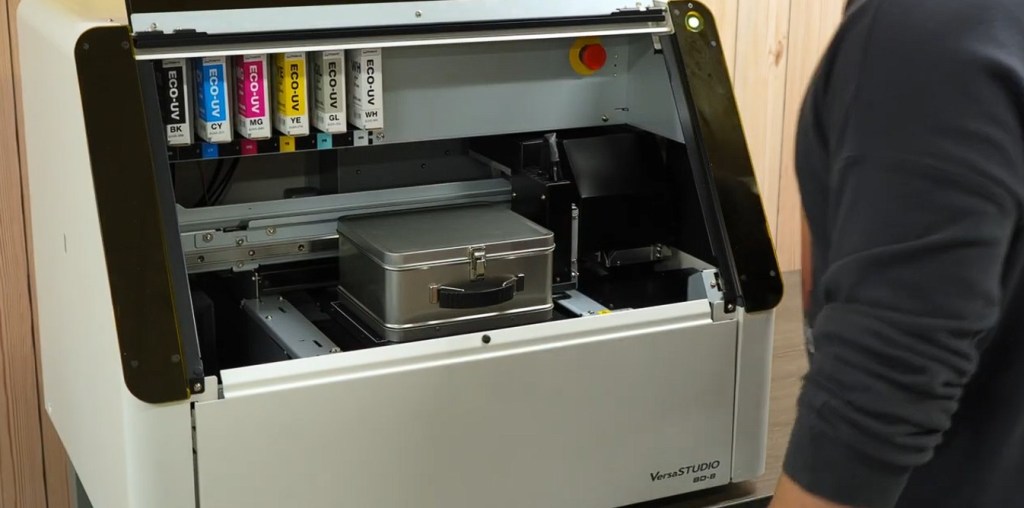
Flatbed UV printers like the Roland VersaSTUDIO BD Series and Epson V Series excel at printing on hard substrates. Think acrylic, metal, tumblers, golf balls, or lunch boxes. If it’s rigid and has a flat or slightly curved surface, UV printing delivers vibrant, durable results.
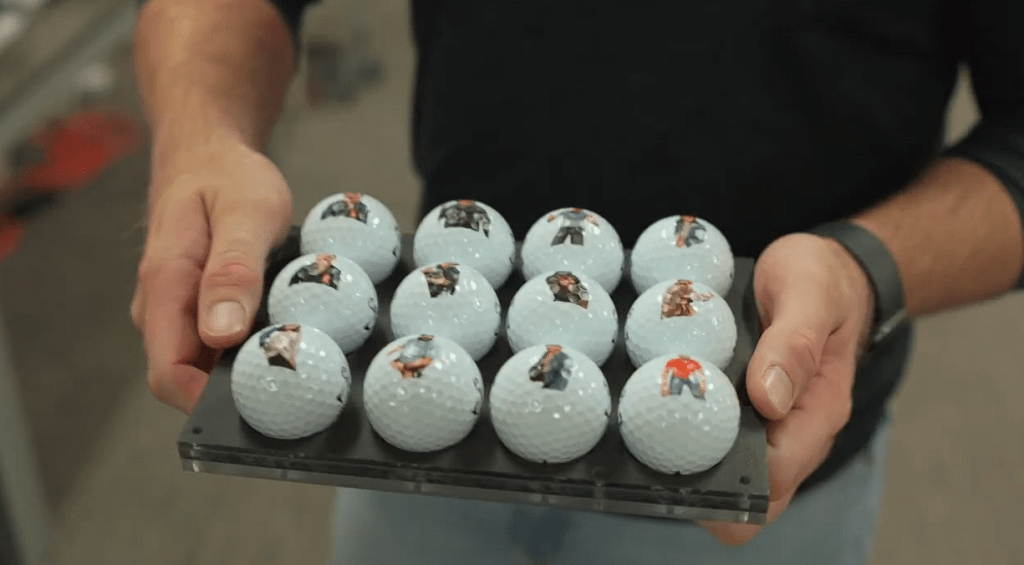
The major advantage here is speed and precision. You get full-color prints with a scratch-resistant finish without worrying about drying time or material limitations typical of heat-cured processes.
DTF Printing: Flexible Prints for Soft Goods
Direct-to-Film, or DTF printing, is a completely different approach. Instead of UV inks, it uses pigment-based DTF inks. The process works like this:
- Print your design onto a special DTF film
- Coat the film with adhesive powder
- Cure the powder in an oven
- Heat-press the design onto apparel, tote bags, or other fabric items
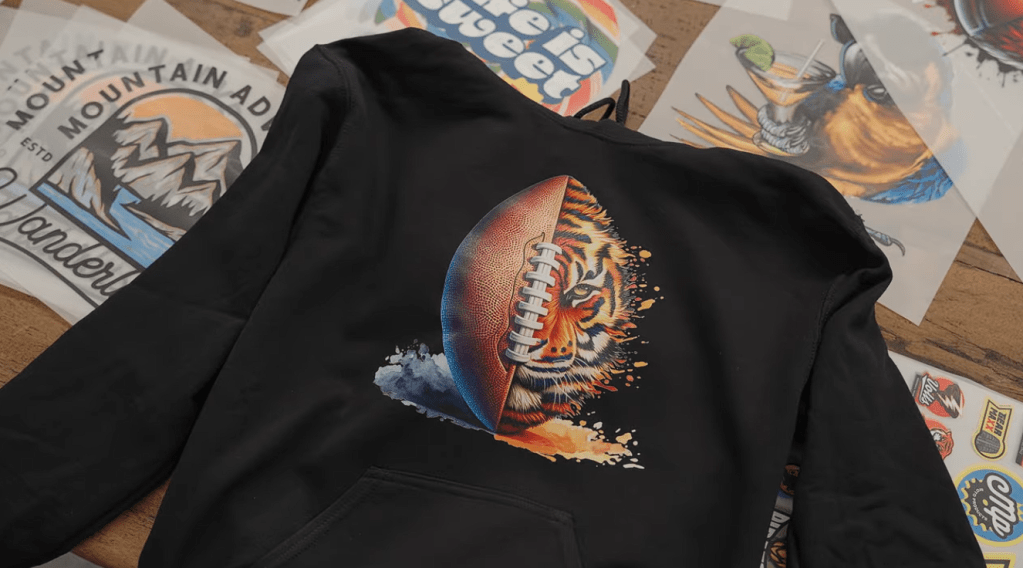
Printers like the Roland BY-20, Roland TY-300, and Epson SureColor G6070 are built specifically for DTF printing. The result is flexible, stretchable, and long-lasting prints that move with the material.
If you’re producing custom t-shirts, hoodies, or soft goods, DTF is your go-to method. Unlike UV printing, it’s designed to work seamlessly with fabrics and soft surfaces.
UV-DTF Printing: Combining UV Ink and Flexibility
UV-DTF might sound like a hybrid of the two methods, but it’s actually UV ink applied to a special film. You cannot use a DTF printer to create UV-DTF prints. Instead, printers like the Roland BD Series or Epson V Series print onto UV-DTF film, creating a glossy, raised, or textured sticker-like print.
This UV-DTF film can then be transferred to curved or irregular hard surfaces using simple pressure or a squeegee. You get the durability and scratch resistance of UV printing but with the ability to adhere to non-flat objects such as tumblers, candles, or glassware.
Key Differences: Ink, Curing, and Applications
When comparing UV, DTF, and UV-DTF printing, three main factors stand out:
- Ink Type: UV and UV-DTF use UV-curable inks, while DTF uses pigment-based inks
- Curing Method: UV and UV-DTF rely on instant curing with a UV light; DTF uses adhesive powder and heat
- Applications:
- UV = hard flat or slightly curved surfaces
- UV-DTF = curved or irregular hard surfaces
- DTF = soft goods and apparel
In simple terms, if you want to print directly onto a flat hard object, UV printing is ideal. If your surface is curved or irregular but still hard, UV-DTF is your solution. And if you are printing on fabrics or soft materials, DTF is the only option that will give you stretchable, long-lasting results.
Choosing the Right Printing Method
Selecting the right printer and method comes down to your products and business needs. Ask yourself:
- Are you customizing tumblers, lunch boxes, or promotional hard goods? Choose UV
- Are your items curved but hard, like mugs or bottles? UV-DTF works best
- Are you producing t-shirts, hoodies, or tote bags? DTF is the right fit
By matching the printing process to your product type, you can ensure high-quality prints that last, reduce wasted materials, and make your workflow smoother.
We cover all of this in detail in our full video comparison. If you’re interested in seeing the full breakdown, you can watch it by clicking here.
IT Supplies is your one-stop shop for everything you need to achieve the perfect print. We partner with top manufacturers to bring you the best in printing technology, including Eco-Solvent, Latex, UV, and Aqueous printers from EPSON, HP, and Canon. Our lineup also features a wide selection of Dye-Sublimation, DTF, and DTG printers from EPSON and HP. Explore our full range at www.itsupplies.com or by giving us a call at 1-800-771-9665!
 IT Supplies Blog