
The Epson SureColor V4000 UV flatbed printer is opening the door to a whole new level of print capability, especially when it comes to Braille and raised texture applications. At Epson’s US Headquarters in California, we got a firsthand look at how this printer builds dimensional, tactile output using layered UV ink technology.
From ADA-compliant signage to custom textured graphics, the V4000 shows how accessibility and premium print effects can be produced on demand with precision and consistency. In this blog, we’ll walk through how the technology works and share insights from Epson product manager David Bistrovic on how operators can bring these applications into real-world production.
How UV Flatbed Printing Creates Raised Texture
One of the standout features of a UV flatbed printer like the Epson SureColor V4000 is its ability to build layers of ink on top of each other. Unlike traditional printing methods, UV ink cures instantly under UV light. That means each layer hardens immediately before the next pass is applied.
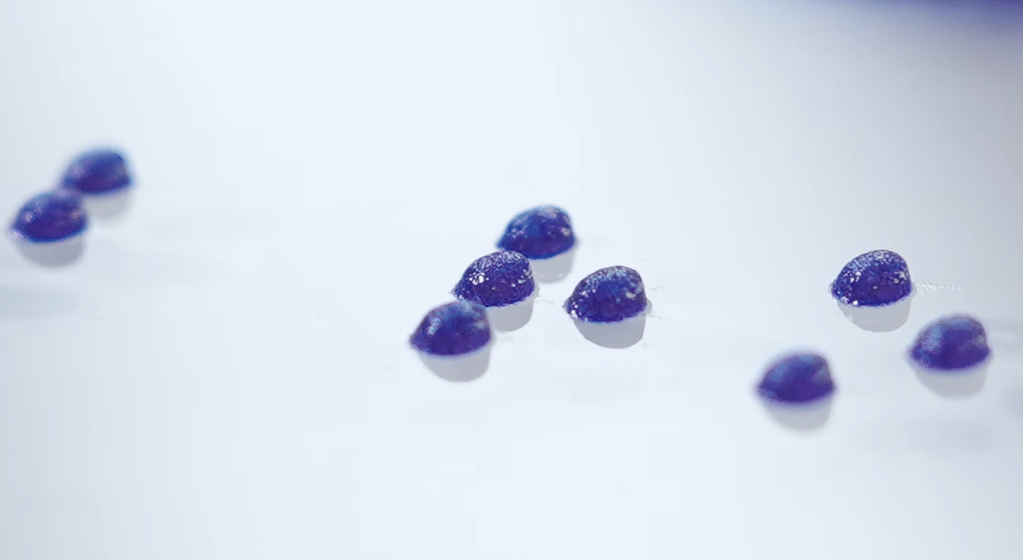
This stacking effect is what makes raised texture printing possible.
Here’s what’s happening in the background:
- The printer reads the design file and identifies texture or Braille layers
- UV ink is laid down in controlled passes
- Each pass is instantly cured, locking the shape in place
- The process repeats until the desired height is achieved
Because of this precision layering system, the Epson SureColor V4000 can create consistent tactile output that feels sharp and intentional, not random or uneven.
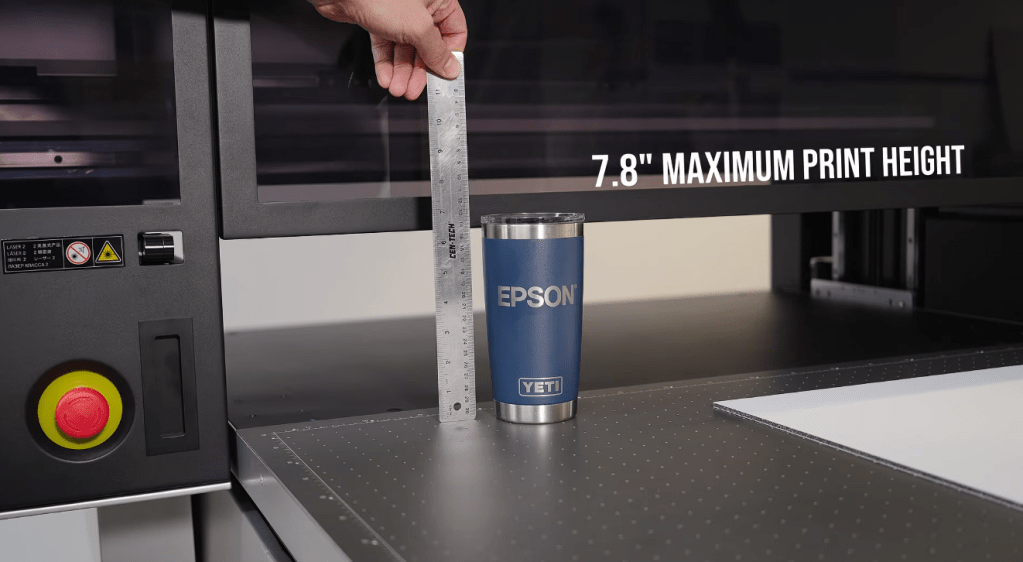
One of the underrated advantages of the Epson SureColor V4000 is its 200mm (7.8”) maximum print height. That extra clearance gives operators a lot more room to experiment when building texture and layered effects. Instead of being limited to perfectly flat, thin materials, you can confidently work with a wide range of substrates and objects. Whether you’re printing on standard vinyl, a cigar box, a shoe box, lunch boxes, or other dimensional items, the V4000 gives you the flexibility to just place the piece on the bed and print. There’s no complicated setup to fight through or special workaround needed. You simply load the item, and the printer handles the rest. That kind of versatility opens the door for both production ADA work and creative specialty applications without slowing down your workflow.
Printing Braille with the Epson SureColor V4000
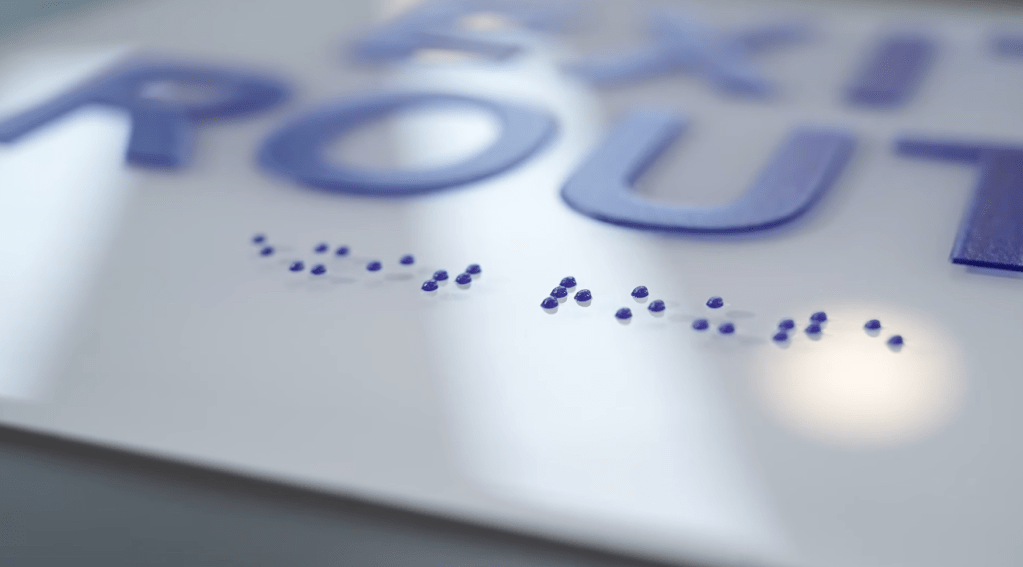
Braille printing is one of the most practical and impactful applications of this technology. Braille is a tactile writing system used by individuals who are visually impaired, and it must meet specific height and spacing standards to be readable.
The Epson SureColor V4000 supports Braille printing by using layered UV ink to build each dot to specification.
During the demo, Epson product manager David Bistrovic explained that the system interprets the file and determines how many passes are required. In most cases, Braille is built using multiple layers until it reaches ADA-compliant height.
A key detail from the workflow:
- It typically takes around five passes to build compliant Braille dots
This makes Braille printing far more accessible for print providers, especially those looking to enter ADA signage production without investing in traditional embossing or mechanical systems.
Raised Texture Printing Beyond Accessibility
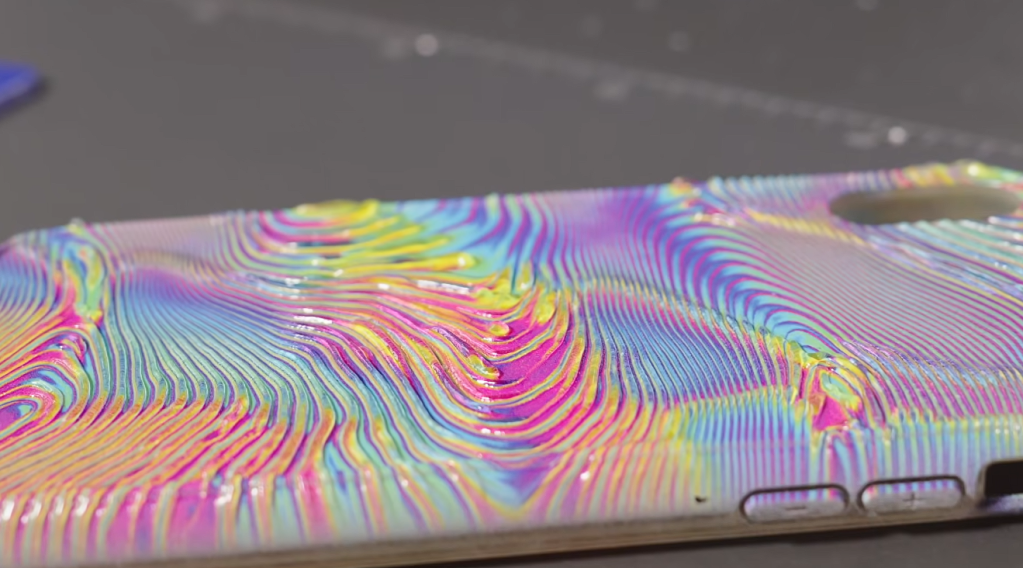
While Braille printing is essential for accessibility, raised texture printing opens up a much broader range of creative and commercial opportunities.
With the Epson SureColor V4000, shops can produce tactile effects such as:
- Raised logos on business cards
- Textured fine art reproductions
- Embossed packaging elements
- Premium promotional products
Because the UV ink builds directly on the substrate, there is no need for dies, molds, or additional finishing equipment. That means shorter turnaround times and lower setup costs.
As David Bistrovic explained, the system can also use matte varnish layers to build texture while preserving the color image underneath. This allows full-color graphics and tactile effects to exist in the same print job without compromise.
File Setup and Workflow Made Simple
One of the biggest concerns print shops have is whether Braille printing is too complex to adopt. The good news is that the workflow is designed to be operator-friendly.
Here’s how it typically works:
- Design is created or converted using Braille translation tools
- Files are brought into a design platform like Adobe Illustrator
- Artwork is sent to Epson Edge Print software
- The operator selects the ADA Braille preset
- The printer automatically calculates layering and passes
There are also third-party tools and plugins available that simplify Braille translation, making it easier for shops to integrate into existing workflows.
Business Opportunities with the Epson SureColor V4000
The real value of the Epson SureColor V4000 lies in the new revenue streams it unlocks.
Braille printing alone opens doors in:
- Government facilities
- Hospitals and healthcare systems
- Schools and universities
- Commercial real estate signage
On the creative side, raised texture printing brings opportunities in premium packaging, branded merchandise, and high-end art reproduction.
What makes this especially powerful is on-demand production. Shops no longer need to outsource embossing or wait on specialized tooling. Everything can be produced in-house with consistent repeatability.
Key Advantages of UV Raised Texture Printing
While there are many benefits, a few stand out clearly:
- No physical dies or molds required
- Instant UV curing for fast production
- High precision layer control
- Ability to combine color and texture in one pass workflow
- Scalable for both accessibility and creative applications
These advantages make UV flatbed technology a strong fit for modern print providers looking to diversify.
Final Thoughts
The Epson SureColor V4000 is more than just a UV flatbed printer. It is a gateway into accessible printing and high-value specialty applications. From Braille printing that supports real-world accessibility needs to raised texture printing that elevates creative output, this technology bridges functionality and innovation in a practical way.
As demand grows for ADA-compliant signage and premium tactile graphics, print providers who adopt these capabilities early will be well positioned to stand out in a competitive market.
The Epson SureColor V4000 represents a shift in how we think about print, not just as something visual, but something you can feel.
Lock in early access by joining our pre-order list today! Click Here to sign up.
Learn more about the Epson SureColor V4000 UV Flatbed Printer. Click Here.
Watch our video to see it in action and learn more about how the Epson SureColor V4000 produces Braille and raised textures.
IT Supplies is your one-stop shop for everything you need to achieve the perfect print. We partner with top manufacturers to bring you the best in printing technology, including Eco-Solvent, Latex, UV, and Aqueous printers from EPSON, HP, and Canon. Our lineup also features a wide selection of Dye-Sublimation, DTF, and DTG printers from EPSON and HP. Explore our full range at www.itsupplies.com or by giving us a call at 1-800-771-9665!
 IT Supplies Blog