
Optical Brighteners are found in many fine art and photo papers, yet they are often misunderstood. In this blog, we break down what OBAs are, why paper manufacturers use them, and whether you really need to avoid them when choosing archival printing materials.
If you’ve ever compared two fine art papers side by side and noticed that one looks noticeably brighter or whiter than the other, chances are you were seeing the effect of Optical Brightening Agents, often referred to as OBAs. At IT Supplies, we talk with photographers, artists, and print professionals every day, and OBAs are one of the most common sources of confusion we encounter.
There is a lot of misinformation out there about Optical Brighteners. Some people believe that papers containing OBAs will quickly fade, yellow, or degrade, turning beautiful fine art prints into something resembling an old newspaper clipping. Others avoid OBAs altogether out of fear that they are somehow unprofessional or non-archival. The truth is far less dramatic and much more nuanced.
In this blog, we’ll explain what OBAs are, how they work, why they exist, and whether you should actually avoid them. If you print photographs or fine art and care about long-term quality, understanding Optical Brighteners will help you make more confident and informed paper choices.
What Are Optical Brightening Agents?
Optical Brightening Agents are chemical compounds added during the paper manufacturing process to make paper appear brighter and whiter. They don’t actually change the physical color of the paper fibers. Instead, they work by interacting with light.
OBAs absorb invisible ultraviolet light and re-emit it as visible blue light. This added blue light shifts our perception of the paper, making it appear cleaner, brighter, and whiter to the human eye. That brighter white point also allows colors printed on the paper to appear more vibrant and punchy, especially in photographic images.
It is important to note that OBAs are not unique to fine art or photo papers. They are widely used in everyday products. Laundry detergents use Optical Brighteners to make fabrics appear cleaner and whiter. Cosmetics and face powders often contain similar compounds to create a brighter appearance on the skin. OBAs are a common and well-understood technology across many industries.
Why OBAs Matter in Printing
In printing, the paper white point plays a major role in how an image looks. A brighter paper base can enhance contrast, improve perceived sharpness, and make colors feel more vivid. For many photographers and artists, this look is highly desirable, especially for modern photography, commercial work, or images with bright highlights.
Papers with Optical Brighteners often provide that crisp, luminous white point that makes prints stand out under gallery lighting or indoor display conditions. This is why many premium fine art papers and canvases include OBAs as an intentional design choice, not as a shortcut or cost-saving measure.
At the same time, some artists prefer a warmer or more natural white point. For that reason, many manufacturers offer the same paper in both OBA and OBA-free versions. This gives printers flexibility to choose based on aesthetic preference rather than fear.
The Real Concern About OBAs and Longevity
The main concern surrounding OBAs is stability over time. Optical Brighteners are not permanent. When exposed to ultraviolet light, such as sunlight or certain artificial lighting, OBAs slowly break down and lose their ability to fluoresce.
As OBAs degrade, the bright white appearance they provide gradually diminishes. This doesn’t happen overnight, and it doesn’t happen at the same rate for every print. The speed of degradation depends largely on how much UV exposure the print receives.
Prints displayed indoors, away from direct sunlight, and under controlled lighting conditions can maintain their OBA brightness for many years and often for decades. Prints exposed to strong sunlight or high UV environments will see OBAs fade more quickly.
This gradual change is what has fueled much of the anxiety around OBAs, but understanding what actually happens when they fade is key.
Do OBAs Turn Prints Yellow?
One of the biggest myths we hear is that when OBAs fade, your print will turn yellow and deteriorate like an old newspaper. This comparison is misleading and incorrect.
Old newspapers were never designed to be archival. They were made from low-quality cellulose pulp, were not acid-free, and contained lignin and other impurities that naturally degrade over time. Yellowing, brittleness, and deterioration were expected outcomes.
Modern fine art papers and canvases are completely different. Whether they contain OBAs or not, quality fine art media today is acid-free and lignin-free. These materials are engineered with archivability in mind and are designed to last for decades or even centuries under proper conditions.
When OBAs fade in a high-quality fine art paper, the paper does not suddenly become unstable or degraded. It simply loses the added brightening effect and reverts to its natural base color.
What Happens When OBAs Fully Degrade?
To really understand this, it helps to look at real-world examples. One of the clearest demonstrations comes from long-term paper samples. We have swatch books that are over a decade old, including paper samples from Epson dating back to 2012.
In Epson’s Cotton Fine Art line, you can find papers like Hot Press and Cold Press offered in both Natural versions without OBAs and Bright versions with OBAs. The only difference between these papers is the presence of Optical Brighteners.
When tested under a blacklight, papers containing OBAs glow bright blue, while OBA-free papers remain dark. Even after more than a decade, the OBA-containing papers still fluoresce strongly, showing that the idea of OBAs fading within a year or two is simply not accurate.
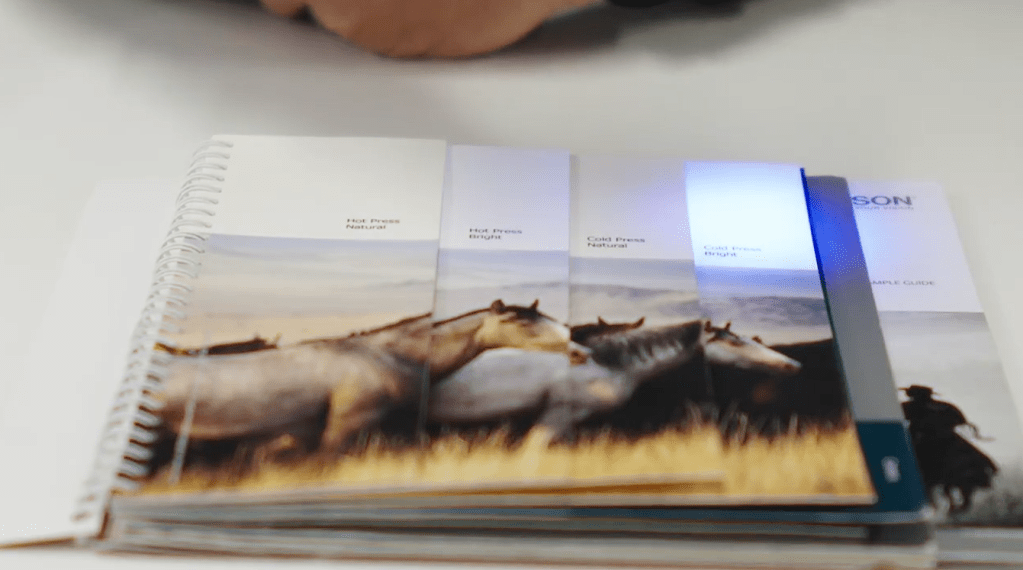
More importantly, when you consider the worst-case scenario, if OBAs were to fully degrade decades down the line, the result is not yellowed paper. The result is a paper that visually matches its OBA-free counterpart. A Cold Press Bright paper becomes indistinguishable from Cold Press Natural. A Hot Press Bright paper becomes subtly warmer and more natural, not damaged or degraded.
Testing for OBAs Yourself
If you’ are’re curious whether a paper contains Optical Brighteners, one of the easiest ways to test is with a blacklight flashlight. These are inexpensive, widely available, and easy to use.
Under a blacklight, papers with OBAs will glow due to the re-emission of UV light as visible blue light. Papers without OBAs will not fluoresce. This simple test can help you better understand the materials you are working with and make more informed choices.
Should You Avoid OBAs?
The short answer is no, not automatically. Choosing whether to use papers with Optical Brighteners should be a matter of preference, display conditions, and desired aesthetics, not fear.
If you want a bright, clean white point and vibrant color reproduction, a quality archival paper with OBAs may be the best choice for your work. If you prefer a warmer, more natural white point or want absolute consistency over extremely long time frames, OBA-free papers are an excellent option.
What matters most is that the paper is high quality, acid-free, lignin-free, and designed for archival printing. OBAs alone do not determine whether a paper is professional or long-lasting.
Industry Perspective on OBAs
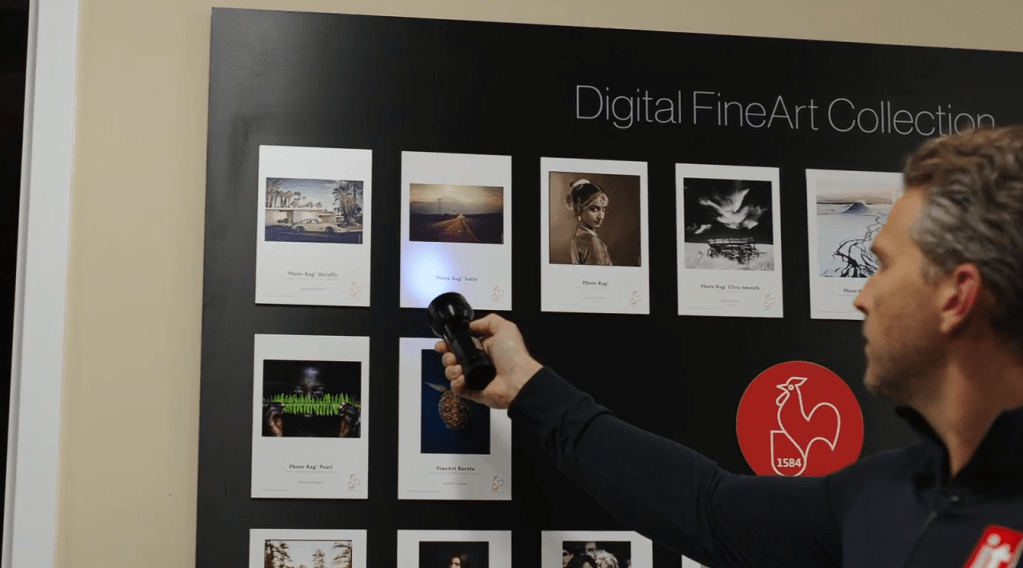
It’s also worth looking at how the most respected paper manufacturers approach OBAs. Hahnemühle, one of the most renowned fine art paper makers in the world, has been producing premium papers for over four centuries. Their history predates Shakespeare, the Mayflower, and even the founding of the United States.
Despite their deep knowledge of paper longevity and archival standards, Hahnemühle does not avoid OBAs entirely. Instead, they offer a wide range of papers, some with Optical Brighteners and some without. This approach reflects confidence in the materials and acknowledges that different artists want different visual results.
If a manufacturer with over 400 years of experience is comfortable offering premium papers with OBAs, that should provide some reassurance.
Choosing the Right Paper for Your Needs
At the end of the day, paper selection should be driven by how you want your work to look and how it will be displayed. There’s no universal right or wrong answer.
Ask yourself a few simple questions:
- Will the print be displayed in direct sunlight or controlled indoor lighting?
- Do you want a bright white point or a warmer, natural tone?
- Are you matching an existing body of work or starting something new?
By answering these questions, you can choose a paper that aligns with your goals rather than avoiding OBAs out of concern that is often exaggerated.
If you’re avoiding papers with optical brighteners because you’re worried your prints will turn yellow, you need to watch our video. We’re going to show you exactly what happens when OBAs fade using a 13-year-old swatch book. The truth is way less scary than what you’ve been told, and it might change which papers you buy!
IT Supplies is your one-stop shop for everything you need to achieve the perfect print. We partner with top manufacturers to bring you the best in printing technology, including Eco-Solvent, Latex, UV, and Aqueous printers from EPSON, HP, and Canon. Our lineup also features a wide selection of Dye-Sublimation, DTF, and DTG printers from EPSON and HP. Explore our full range at www.itsupplies.com or by giving us a call at 1-800-771-9665!
 IT Supplies Blog